Few tarot cards speak about movement as clearly as The Chariot and Six of Swords. At first glance, both cards appear to represent travel, transition, and leaving something behind. Yet the emotional tone of each card is completely different.
One journey is powered by will, determination, and active direction.
The other is quieter — a necessary crossing away from pain, uncertainty, or emotional exhaustion.
Understanding the difference between these two cards can completely shift how you interpret movement in a tarot reading.Whether these cards appear separately or together, they often reveal how someone is moving through change — either by taking control of their path or by slowly healing through transition.
The Chariot — Movement Through Willpower
Core Themes
- Determination
- Victory through discipline
- Direction and control
- Momentum
- Focused ambition
- Personal power
Astrological Correspondence
- Zodiac Sign: Cancer
- Elemental Association: Water
- Planetary Ruler: The Moon
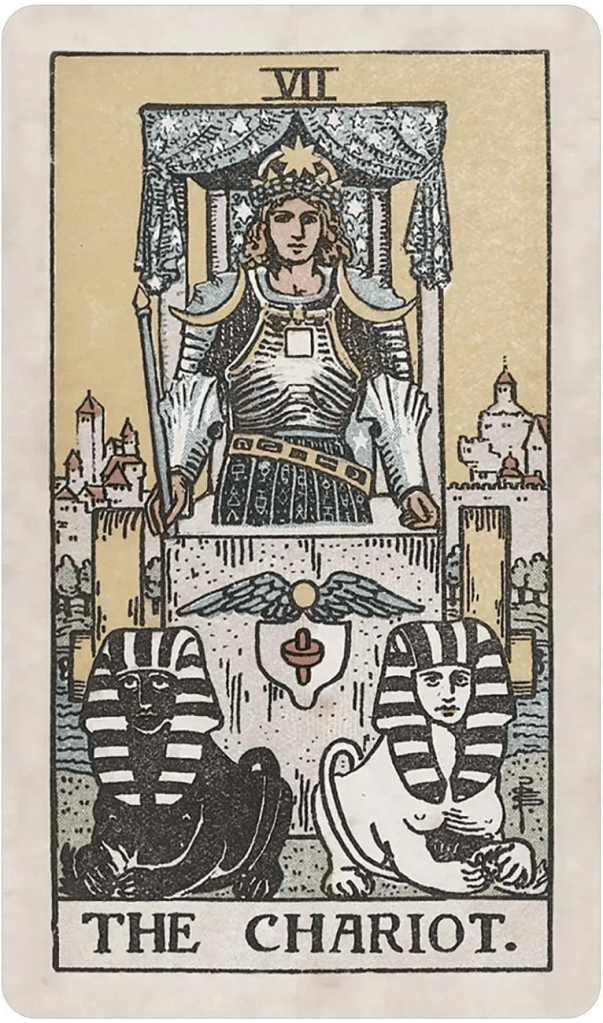
Despite being associated with emotional Cancer energy, The Chariot is not passive. This card represents emotional mastery — learning how to direct instinct, emotion, and opposing forces toward a clear goal.
In the classic Rider–Waite–Smith imagery, the charioteer stands between two sphinxes pulling in opposite directions. The lesson is not about eliminating conflict, but learning how to steer through it.
The Chariot often appears when:
- You are reclaiming control of your life
- Momentum is building quickly
- Discipline matters more than emotion
- Success requires commitment and focus
- You are actively pursuing something important
This is a card of conscious movement.
The Chariot says:
“You know where you’re going. Keep moving.”
Six of Swords — Movement Through Healing
Core Themes
- Transition
- Recovery
- Emotional distance
- Leaving pain behind
- Quiet transformation
- Necessary endings
Astrological Correspondence
- Mercury in Aquarius
- Element: Air
The Six of Swords carries a very different emotional atmosphere.
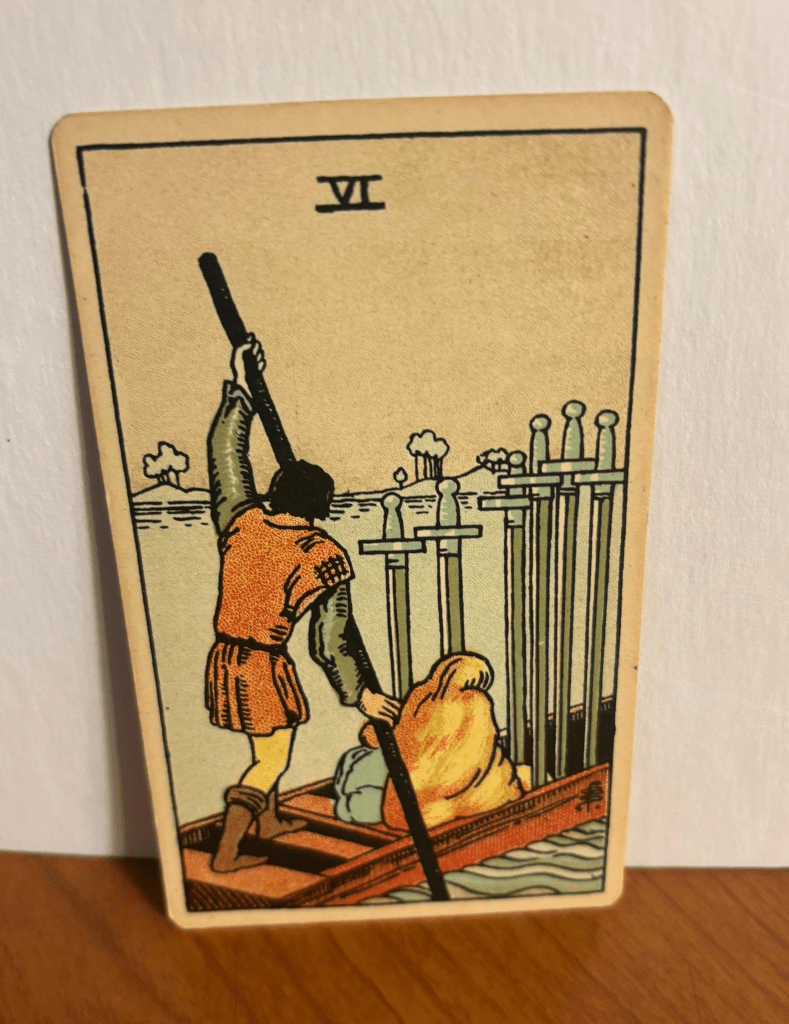
Unlike The Chariot, this card is not about conquering obstacles through force of will. Instead, it reflects the quieter experience of moving away from difficulty because staying where you are has become impossible or unhealthy.
In many decks, a figure travels silently across water in a small boat. The water behind them is rough, while the water ahead is calmer.
This is a card of emotional transition.
The Six of Swords often appears when:
- You are recovering from emotional turmoil
- A difficult chapter is ending
- Distance is needed for healing
- You are mentally processing grief or change
- The future feels uncertain, but necessary
The Six of Swords says:
“You may not know exactly where you’re going yet, but you know you cannot stay here.”
The Biggest Difference Between These Cards
- The Chariot Chooses Movement
- Six of Swords Accepts Movement
This distinction matters deeply in tarot interpretation.
- The Chariot is proactive.
- The Six of Swords is reactive.
- The Chariot pushes forward with intention.
- The Six of Swords drifts toward peace after struggle.
One card says:
“I’m taking control.”
The other says:
“I need to leave.”
Neither card is better than the other. They simply reflect different stages of growth.
Emotional Tone Comparison
| The Chariot | Six of Swords |
| Fast momentum | Slow transition |
| Assertive | Reflective |
| Confidence | Vulnerability |
| Active control | Emotional processing |
| Victory through effort | Healing through distance |
| Driven movement | Necessary retreat |
When These Cards Appear Together
Together, these cards can describe:
- Leaving behind emotional pain and actively rebuilding your life
- Transitioning from survival mode into empowerment
- A physical move or major life transition
- Emotional resilience after hardship
- Learning when to push forward and when to surrender
This combination often appears during:
- Career changes
- Relocation
- Recovery after burnout
- Ending unhealthy relationships
- Spiritual transformation
- Emotional healing journeys
The Six of Swords may describe the departure itself.
The Chariot may describe what happens once you regain confidence and direction again.
Questions to Ask Yourself
If You Pull The Chariot
- What am I trying to control?
- Where do I need stronger focus or discipline?
- Am I directing my energy intentionally?
- What goal requires commitment right now?
If You Pull Six of Swords
- What am I mentally or emotionally leaving behind?
- Where do I need distance or healing?
- What transition am I resisting?
- What would peace look like for me?
Crystal Pairings
For The Chariot
- Carnelian — confidence, courage, motivation
- Tiger’s Eye — focus, determination, grounded action
- Labradorite — resilience during transformation
For Six of Swords
- Aquamarine — emotional release and calm communication
- Amethyst — healing, spiritual clarity, rest
- Moonstone — navigating emotional transitions gently
Final Thoughts
The Chariot and Six of Swords both represent movement, but they reveal entirely different relationships with change.
The Chariot is movement powered by determination.
The Six of Swords is movement shaped by healing.
Sometimes life asks us to fight for where we are going.
Other times, growth begins the moment we finally leave something behind.
Both journeys are sacred.
Sources
- Biddy Tarot — The Chariot Meaning
- Biddy Tarot — Six of Swords Meaning
- Labyrinthos Tarot Meanings Library
- The Pictorial Key to the Tarot by A. E. Waite
-Madame Solstice-

Leave a comment