Traditional (Chaldean) & Modern (Triplicity) Systems with Tarot Correspondences
Aries decans divide the 30 degrees of Aries into three distinct personality layers. In both traditional (Chaldean) astrology and modern triplicity systems, these decans refine how Aries energy expresses itself. When integrated with Tarot, they reveal deeper nuance in leadership, action, and passion.
If you’ve ever met two Aries placements that felt completely different, you’ve already encountered the power of astrological decans.
Aries spans 30 degrees of the zodiac — but those 30 degrees are divided into three 10-degree segments called decans. Each decan adds a secondary planetary influence that refines how Aries energy expresses itself.
In this guide, we’ll explore:
- The three Aries decans
- The Traditional (Chaldean) system used in Tarot
- The Modern (Triplicity) system used in contemporary astrology
- How to apply Aries decans in real chart interpretation
Because Aries is not one-note, and decans are where the nuance lives.
What Is a Decan?
Each zodiac sign contains 30 degrees.
Those 30 degrees are divided into three sections:
- 0°–10°
- 10°–20°
- 20°–30°
Each section is assigned a sub-ruler that modifies how the sign’s primary ruler expresses itself.
Important:
The decan ruler does not replace the sign ruler. It adds tonal nuance.
Think of it this way:
- Sign ruler = foundation
- Decan ruler = architectural style
Now let’s explore how that works in Aries.
Aries Decans — Traditional (Chaldean) System
The Traditional decan system — also called the Chaldean system — is based on the ancient planetary speed order:
Saturn → Jupiter → Mars → Sun → Venus → Mercury → Moon
This sequence continues through the zodiac without resetting.
Tarot’s Minor Arcana decan correspondences are built on this system.
Aries Chaldean Decans
| Degrees | Sub-Ruler | Tarot Correspondence |
| 0°–10° | Mars | Two of Wands |
| 10°–20° | Sun | Three of Wands |
| 20°–30° | Venus | Four of Wands |
First Decan Aries (0°–10°) — Mars Sub-Ruled
This is Aries in its purest form.
- Direct
- Competitive
- Initiatory
- Action-driven
Mars amplifies the cardinal fire quality.
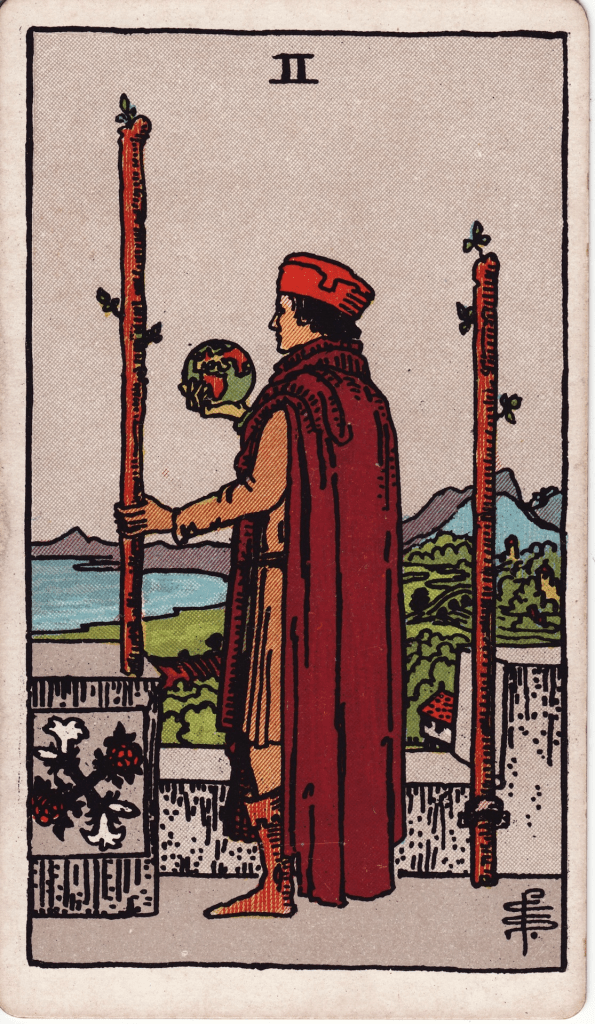
In Tarot, the Two of Wands represents expansion and forward movement. This is the Aries who starts before permission is granted.
Shadow expression:
- Impatience
- Burnout
- Conflict-seeking
Second Decan Aries (10°–20°) — Sun Sub-Ruled
Here, Aries becomes visible.
- Charismatic
- Leadership-oriented
- Recognition-aware
- Pride-driven
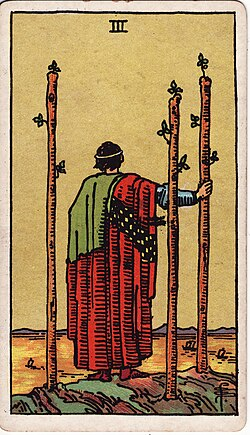
The Three of Wands reflects personal authority and direction-setting. This Aries wants to define their path — and be seen doing it.
Shadow expression:
- Ego clashes
- Over-identification with success
Third Decan Aries (20°–30°) — Venus Sub-Ruled
This Aries fights for connection.
- Passionate
- Loyal
- Protective
- Magnetically charming
The Four of Wands symbolizes foundation, celebration, and community. This Aries builds around love and loyalty.
Shadow expression:
- Jealousy
- Reactivity in relationships
Modern Aries Decans (Triplicity System)
While Tarot uses the Chaldean system, many modern astrologers apply the triplicity method.
This system assigns decans based on shared elemental rulership.
Aries is a fire sign, so the co-rulers follow the fire triplicity:
Aries → Leo → Sagittarius
Modern Aries Decans
| Degrees | Co-Ruler | Influence |
| 0°–10° | Mars | Pure Aries |
| 10°–20° | Sun | Expressive, dramatic |
| 20°–30° | Jupiter | Expansive, visionary |
Notice something interesting:
The first two decans match the Chaldean system.
The third decan is where they diverge.
Traditional assigns Venus.
Modern assigns Jupiter.
That difference changes the interpretation significantly.
Chaldean vs Modern: What’s the Difference?
The systems answer different questions.
Chaldean system:
- Based on planetary speed hierarchy
- Integrates directly with Tarot
- Cosmological and occult in structure
Modern triplicity system:
- Based on the shared element
- Feels psychologically intuitive
- Blends seamlessly into contemporary chart reading
Neither is “right” or “wrong.”
They illuminate different layers.
You may even find that both resonate at different moments in your life.
How to Apply Aries Decans in Chart Interpretation
To find your Aries decan:
- Locate the degree of your Aries placement.
- Identify which 10-degree range it falls into.
- Apply the sub-ruler nuance.
Example:
Someone born on April 19 is typically around 29° Aries.
Under:
- Chaldean → Venus-influenced Aries
- Modern → Jupiter-influenced Aries
Both interpretations may feel valid — they simply highlight different archetypal tones.
Final Thoughts: The Three Faces of Aries
Aries is not one personality.
It can be:
- A warrior (Mars)
- A leader (Sun)
- A lover (Venus or Jupiter, depending on system)
Decans transform surface astrology into layered interpretation.
And that’s where real insight begins.
FAQ About Aries Decans
What degree is the third decan of Aries?
20°–30° Aries.
Which decan is April 19?
Typically, third decan Aries.
Does Tarot use modern or traditional decans?
Tarot uses the traditional Chaldean decan system.
We’ve seen how Aries unfolds through the Two, Three, and Four of Wands.
Next, we will dive into Taurus — where the Five, Six, and Seven of Pentacles reveal a completely different rhythm of growth.
Find your Aries placement by degree and see which decan shapes your personality. If you discovered something new, share this post or explore the next sign in the Decans Series, Taurus (coming soon).
Madame Solstice

Leave a comment